Understanding how brand premiumization packaging operates is essential for brand managers, packaging engineers, and procurement directors looking to expand unit margins. Unlike ultra-high-end luxury packaging—which relies on bespoke molds, heavy zinc alloys (Zamak), and high Cost of Goods Sold (COGS) for hyper-exclusive price points ($150 to $500+)—brand premiumization focuses on elevating mass-market, masstige, and premium products into higher retail tiers ($25 to $90+) at a controlled, scalable packaging cost.
According to market research from NielsenIQ (NIQ), successful FMCG and CPG brands achieve growth by increasing customer-perceived value to earn higher unit contribution margins. Packaging serves as the primary physical vehicle for this transition. It acts as a mental shortcut for quality on retail shelves, justifying higher price points before the consumer ever experiences the product inside.
By strategic manipulation of material density, closure mechanics, and surface tactile contrasts, brand owners can execute a high-impact brand premiumization packaging strategy that elevates product lines without inflating capital expenditure.
1. The Sensory Architecture: Weight, Density, and Tactile Contrast
Consumers evaluate product quality within seconds of physical touch. In brand premiumization packaging, sensory mechanics replace lightweight, generic plastics with materials that convey stability, craftsmanship, and permanent value.
-
Physical Weight as a Quality Heuristic: Heavier packaging is psychologically associated with higher product concentration and purity. Transitioning from a thin plastic closure to an organic hardwood cap or adding a weighted insert to a container instantly shifts consumer perception from commodity to crafted item.
-
Tactile Temperature and Texture: Replacing cold, synthetic polymers with warm, natural hardwoods (such as American Walnut or European Beech) or crisp, cold-touch stamped metal creates an immediate tactile contrast. According to consumer behavior studies on ResearchGate packaging perception models, multi-sensory packaging touchpoints dramatically increase brand loyalty and price acceptance.
-
Elimination of Mold Lines: Standard injection-molded plastics often leave visible parting lines and lightweight acoustics. Premiumized components conceal structural seams using wrapped turned wood, seamless metal caps, or precision-fitted liners.
2. Functional Rituals: Mechanical Engineering and Closure Feedback
Premiumization is not merely visual; it is experiential. Introducing deliberate mechanical feedback during the unboxing and usage phase transforms a routine utility into a brand-defining ritual.
-
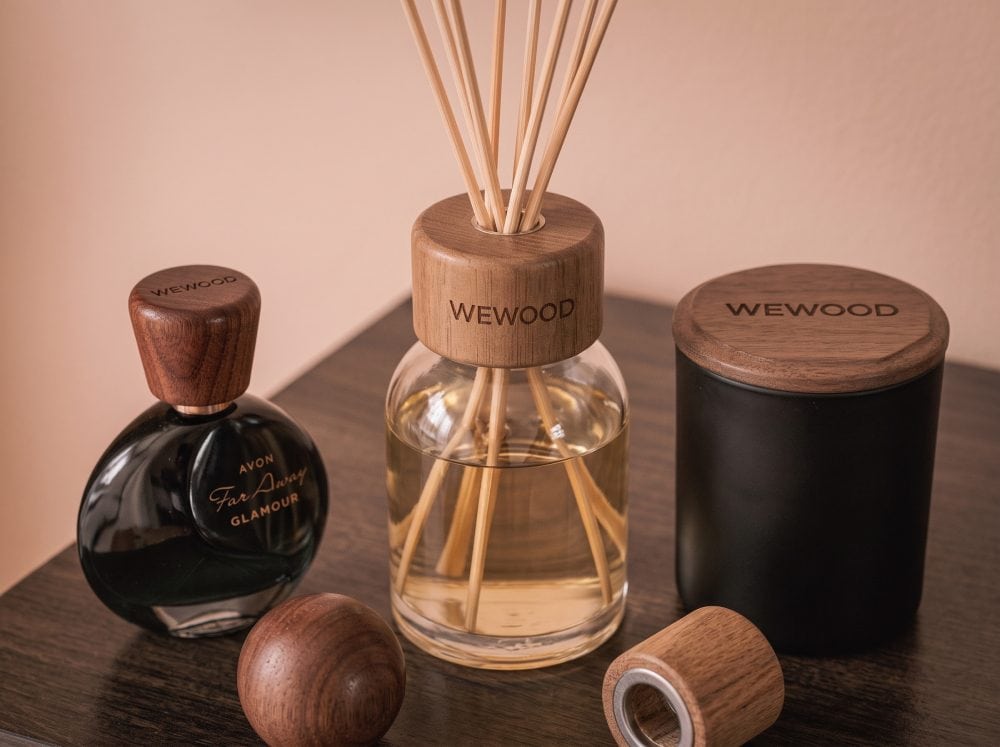
The Acoustic “Click”: Incorporating high-power Neodymium magnets into custom wood perfume closures or weighted tinplate caps produces a distinct, dampened auditory feedback upon closing. This tactile “click” reassures the user of a secure seal while signaling precision engineering.
-
Dampened Extraction Force: Calibrating cap pull-off forces between 5 to 8 Newtons prevents loose, rattling closures while avoiding stiff, abrasive extraction.
-
Controlled Fitment Gaskets: In candle and vessel packaging, upgrading from a raw edge lid to an engineered silicone ring fitment creates a smooth suction drop and an airtight seal that preserves volatile fragrance oils over shelf storage.
3. The Decoupled Component Strategy: Maximizing ROI on Standard Glass
Re-tooling a custom glass bottle or ceramic vessel requires massive upfront mold investment and long lead times. A core pillar of scalable brand premiumization packaging is the Decoupled Component Strategy.
Instead of altering the main glass container, brands maintain standard, mass-produced glass or ceramic vessels (such as standard FEA15 fragrance necks or standard candle jar diameters) and concentrate their customization budgets on high-touch closure hardware:
-
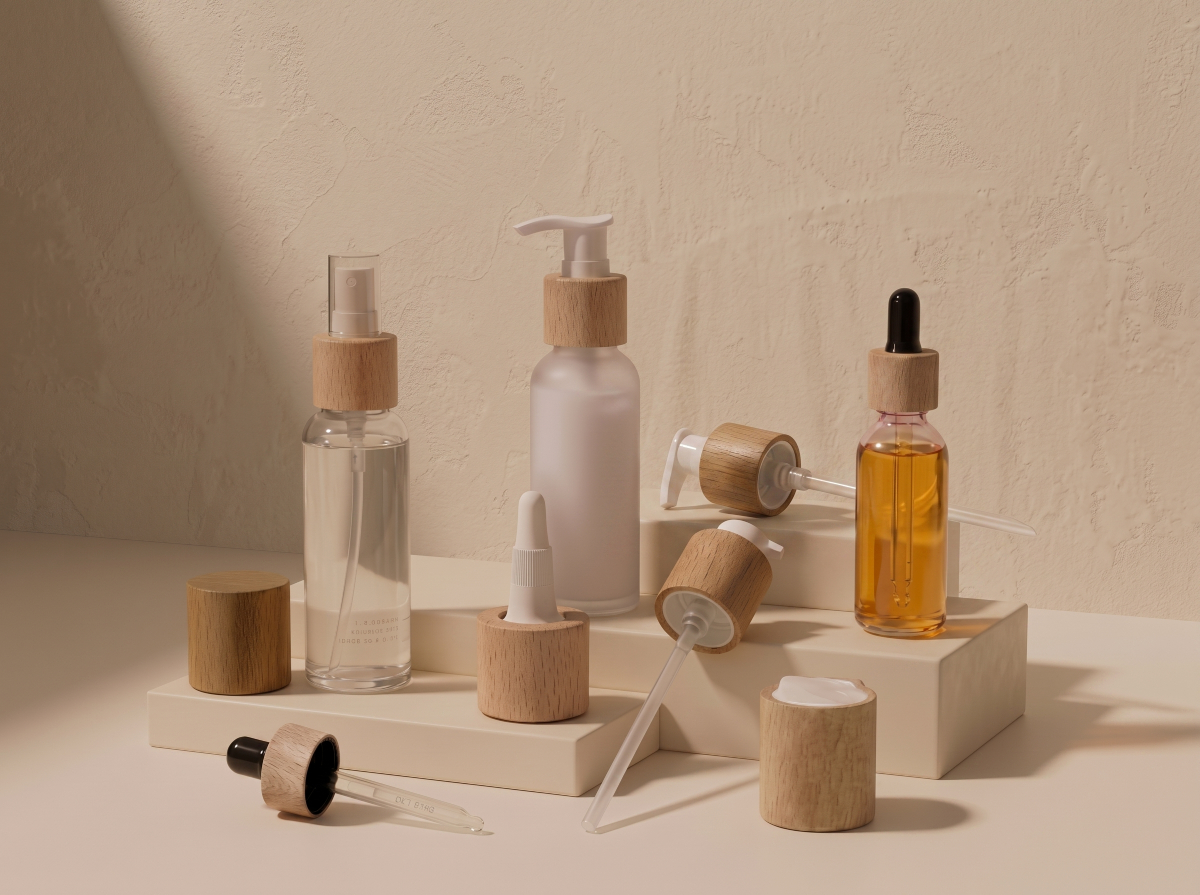
Custom Wooden Closures Wholesale: Sourcing pre-milled hardwood shells fitted with standardized internal plastic cores allows brands to achieve a custom silhouette, laser-engraved top logo, and unique wood stain for a fraction of full-vessel tooling costs.
-
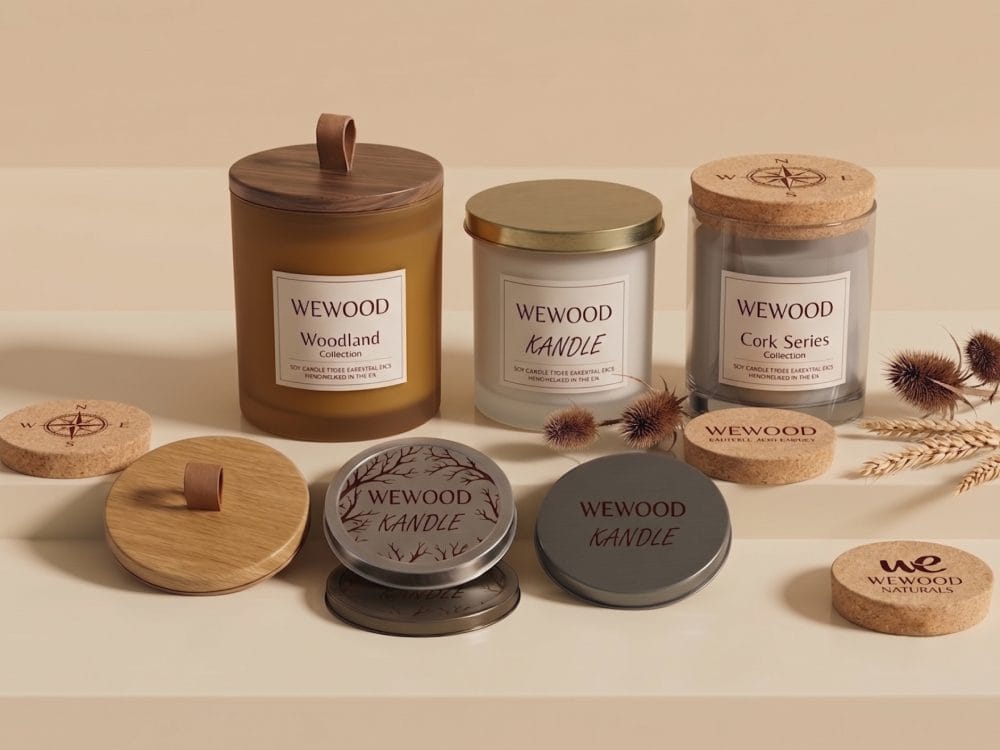
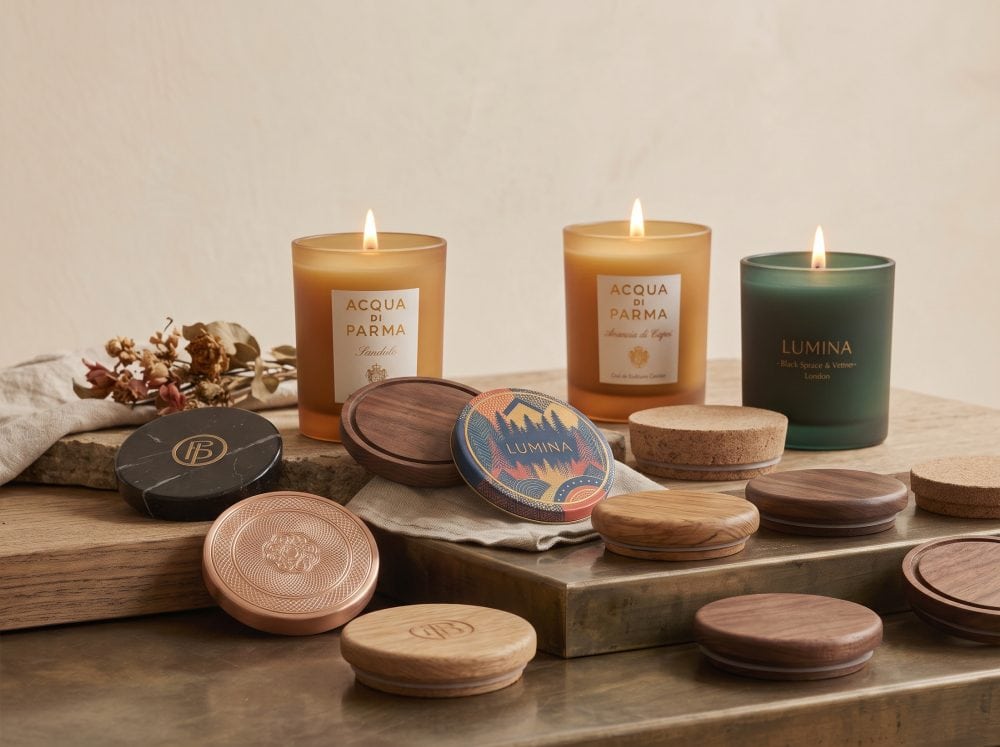
Tinplate Candle Lids Manufacturer Solutions: Applying custom-embossed, stamped tinplate lids or brushed metal covers over off-the-shelf glass jars transforms standard glassware into collector-worthy vanity centerpieces.
This approach allocates capital directly to the component the consumer touches most frequently, maximizing perceived value while keeping primary container COGS lean.
4. Visual Hierarchy & Tiering: Creating “Reserve” and “Special Edition” SKUs
Effective brand premiumization packaging enables a single core brand to build a multi-tiered portfolio (e.g., Core Line -> Reserve Collection -> Limited Edition) without splintering supply chain efficiency.
Tier 1: Core Line (Standard Retail)
-
Vessel: Standard clear glass or amber jar.
-
Closure: Standard plastic friction cap or plain aluminum lid.
-
Packaging Strategy: High volume, baseline margin.
Tier 2: Premiumized Reserve Line (+40% to +80% Retail Price)
-
Vessel: Same standard glass base with a matte spray coating or deep jewel-toned finish.
-
Closure: FSC-certified custom wooden closure with laser-engraved branding or branded tinplate candle lid with deep relief embossing.
-
Packaging Strategy: Moderate COGS increase yield significantly higher gross margin per unit.
Tier 3: Limited / Private Collection (+150%+ Retail Price)
-
Vessel: Heavy-base glass with custom coating.
-
Closure: Magnetic wooden closure featuring a weighted metal insert or electroplated metallic lid.
-
Packaging Strategy: High margin, halo effect for the entire brand portfolio.
Strategic Matrix: Standard Packaging vs. Brand Premiumization Packaging
| Sourcing Vector | Standard Mass Packaging | Brand Premiumization Packaging | Luxury Bespoke Packaging |
| Primary Objective | Protect & Contain (Low Cost) | Elevate Perceived Value & Margin | Exclusivity & Brand Halo |
| Target Retail Tier | $8 – $20 | $25 – $90 | $150 – $500+ |
| Tooling Commitment | Zero (Stock Catalog) | Low to Moderate (Open-Tool Core + Custom Finish) | High (100% Custom Molds & Dies) |
| Closure Materials | Polypropylene, basic aluminum | Turned Hardwoods, Stamped Tinplate, Weighted Caps | Heavy Zamak, Crystal, Precious Metals |
| Tactile Experience | Lightweight, plastic friction fit | Substantial weight, organic grain, magnetic click | Heavyweight density, cold-metal touch |
| Marginal COGS Increase | Baseline (1.0x) | Moderate (+1.3x to 1.8x) | Extreme (+4.0x to 10.0x+) |
| Return on Investment | Low margin per unit | Maximum unit contribution margin | Low volume yield |
Executing a Sustainable Premiumization Strategy
Deploying an effective brand premiumization packaging framework requires balancing aesthetics, functional durability, and manufacturing scalability. By focusing on touchpoint components—upgrading caps to sustainably sourced, FSC-certified hardwoods, introducing engineered magnetic fitments, and deploying decorative tinplate accents—brands can reframe their value proposition. This approach allows products to command price premiums, defend against private-label compression, and deliver a memorable consumer experience on the retail shelf.
Ready to Elevate Your Product Line with High-Yield Premiumized Components?
Protect your margins and unlock higher retail price tiers without excessive tooling CapEx. Contact Wewood’s technical engineering team today to review our master catalog of pre-engineered wooden closures, magnetic cap assemblies, and bespoke tinplate candle lids.
Expert Guide Follow-up Question
Are you looking to premiumize an existing product line by retrofitting a custom wooden closure to a standard glass bottle finish, or are you developing a multi-tiered collection from scratch?